
Compare · Paint & colour
RAL D2, K5 or K7: how to choose the right colour fan
In short
First look at the code in your project. A four-digit RAL CLASSIC code (such as RAL 7016)? Choose the K5 for large colour areas or the K7 for compact lookups. A seven-digit DESIGN SYSTEM plus code? Then you need the D2. More colours do not make the D2 better, only different.
Which one suits you?
Your project has a seven-digit DESIGN SYSTEM plus code, or you are still looking for the colour.
RAL D2
1,825 colours · 2.5 × 5 cm per colour
Not in stock right now
Let me know
You have a four-digit CLASSIC code and want to see large semi-matt colour areas.
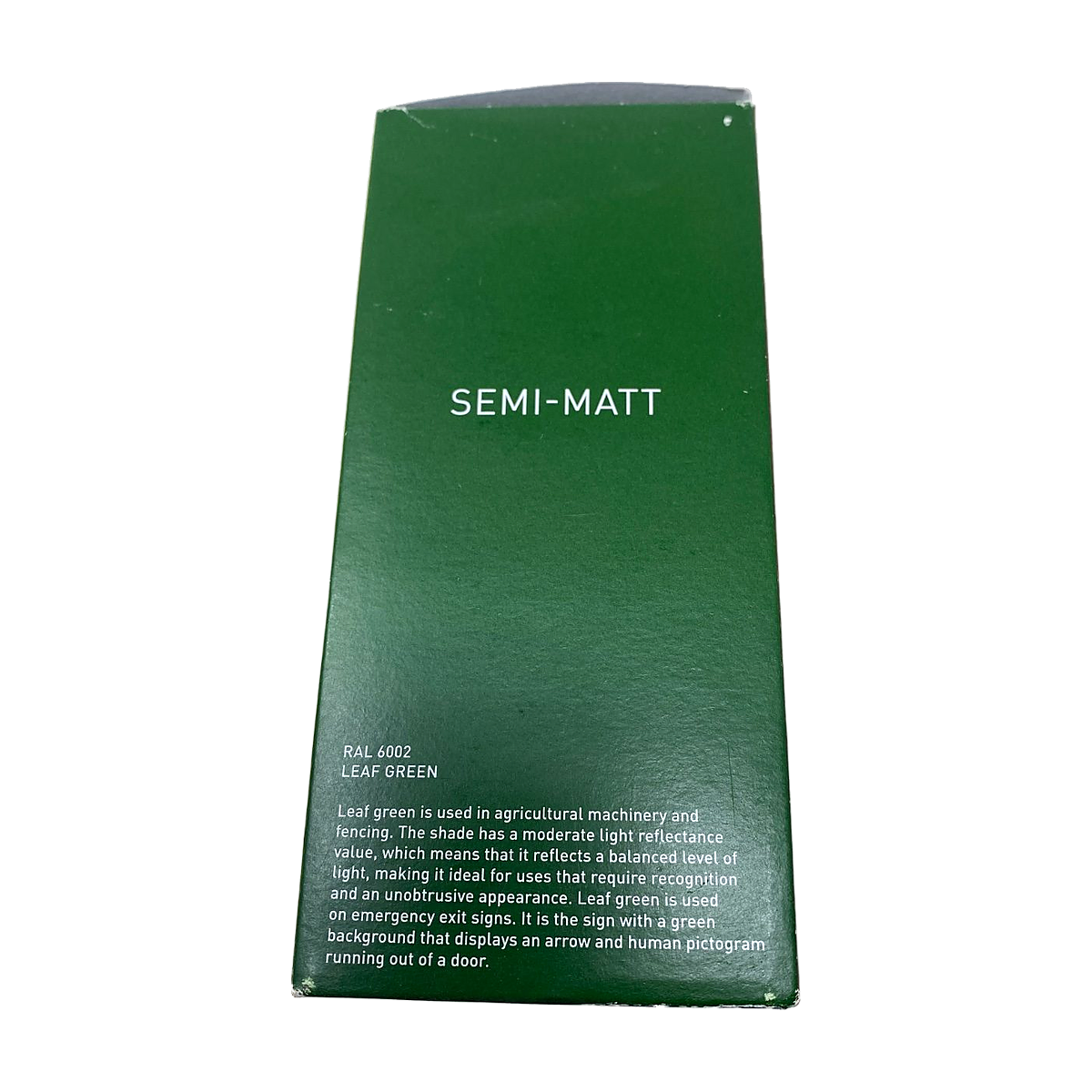
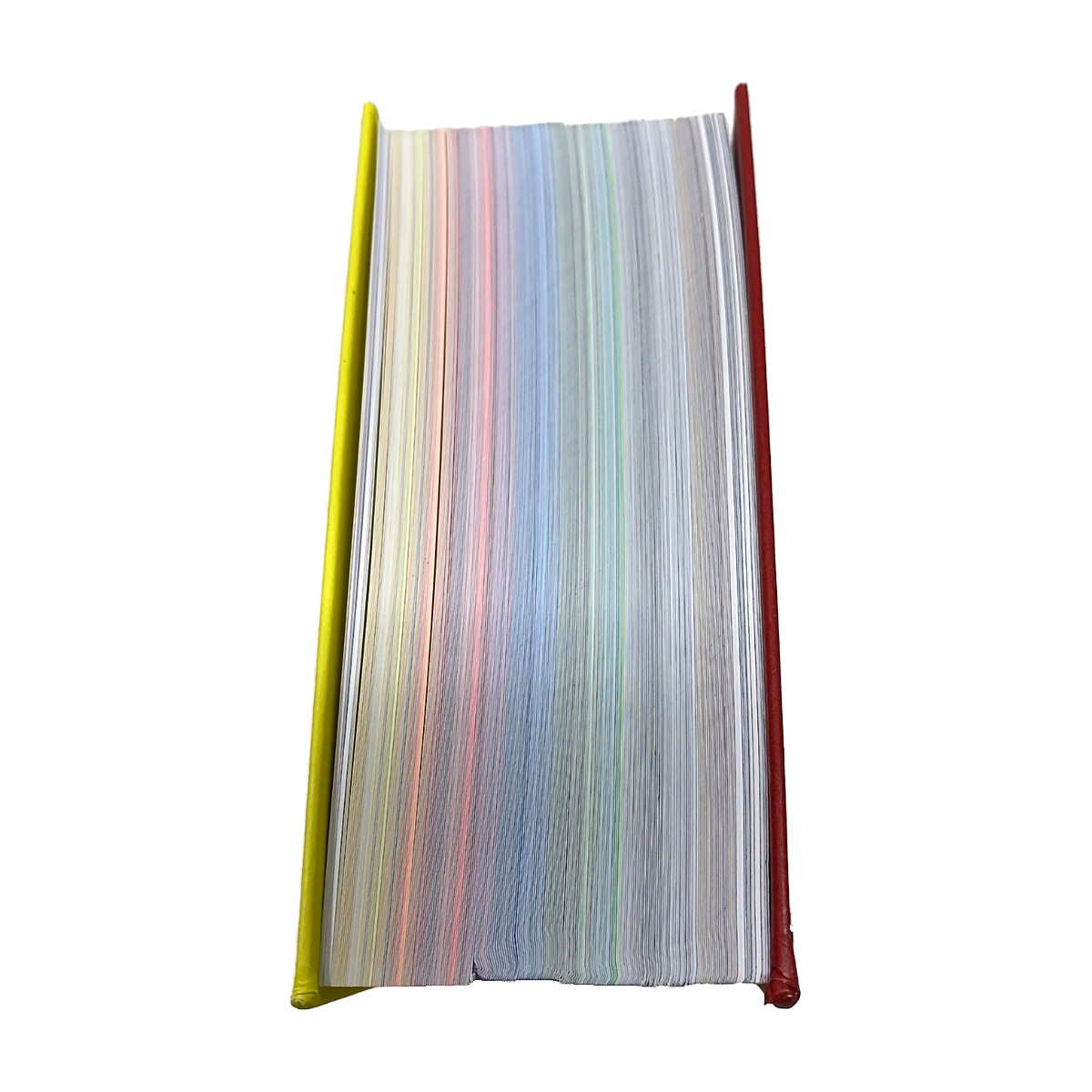
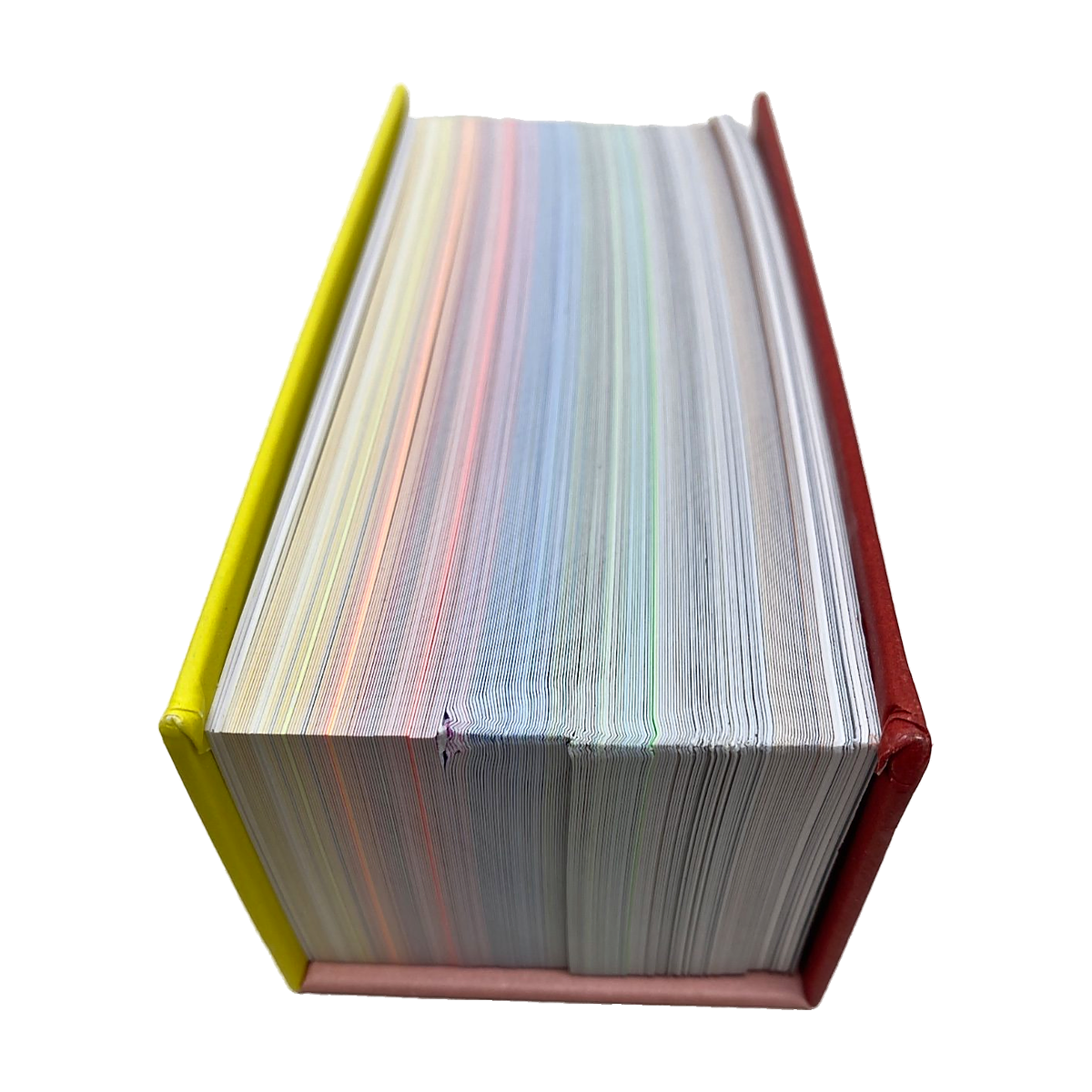
RAL K5 semi-matt
216 CLASSIC · 5.5 × 15.6 cm per colour
In stockVery good
View second-hand · €39.99You are judging gloss paint or need the LRV values.
RAL K5 gloss
216 CLASSIC · gloss · LRV values
Not in stock right now
Let me know
You have a four-digit CLASSIC code and want something compact for the van or the desk.
RAL K7
216 CLASSIC · 5 per page, 2 × 5 cm
Not in stock right now
Let me know
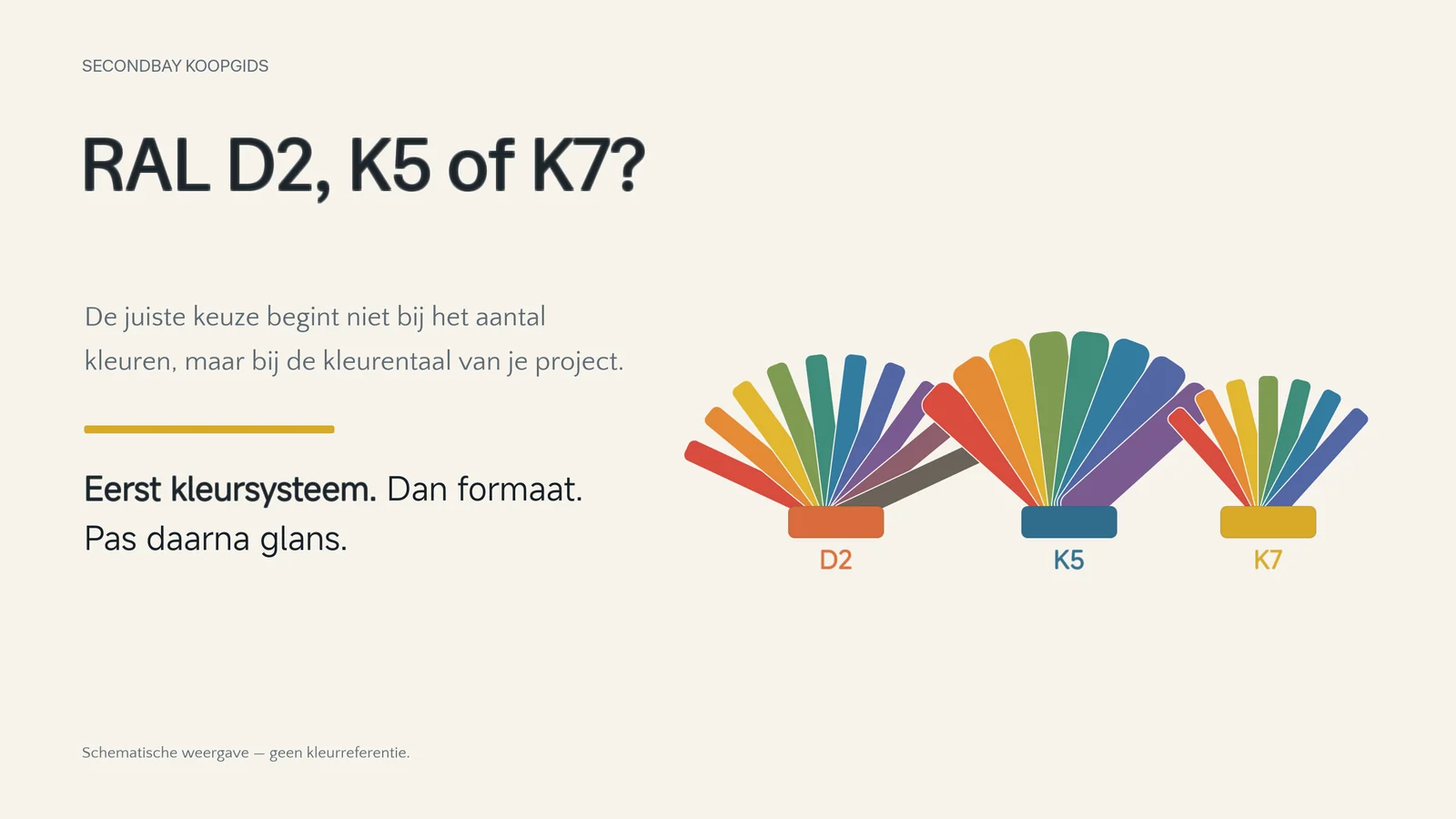 Enlarge
More colours, so better? With RAL it does not work like that.
The RAL D2 contains 1,825 colours. The K5 and K7 each contain 216. Yet the D2 can be the wrong purchase for you. Not because it is bad, but because it speaks a different colour language.
The first question is therefore not which fan is the best?, but: which RAL code appears in your project?
A RAL code works like the address of a colour. The name helps you recognise it, but the code tells the paint supplier, coater or manufacturer which reference you mean. RAL CLASSIC and RAL DESIGN SYSTEM plus are two different systems in this respect.
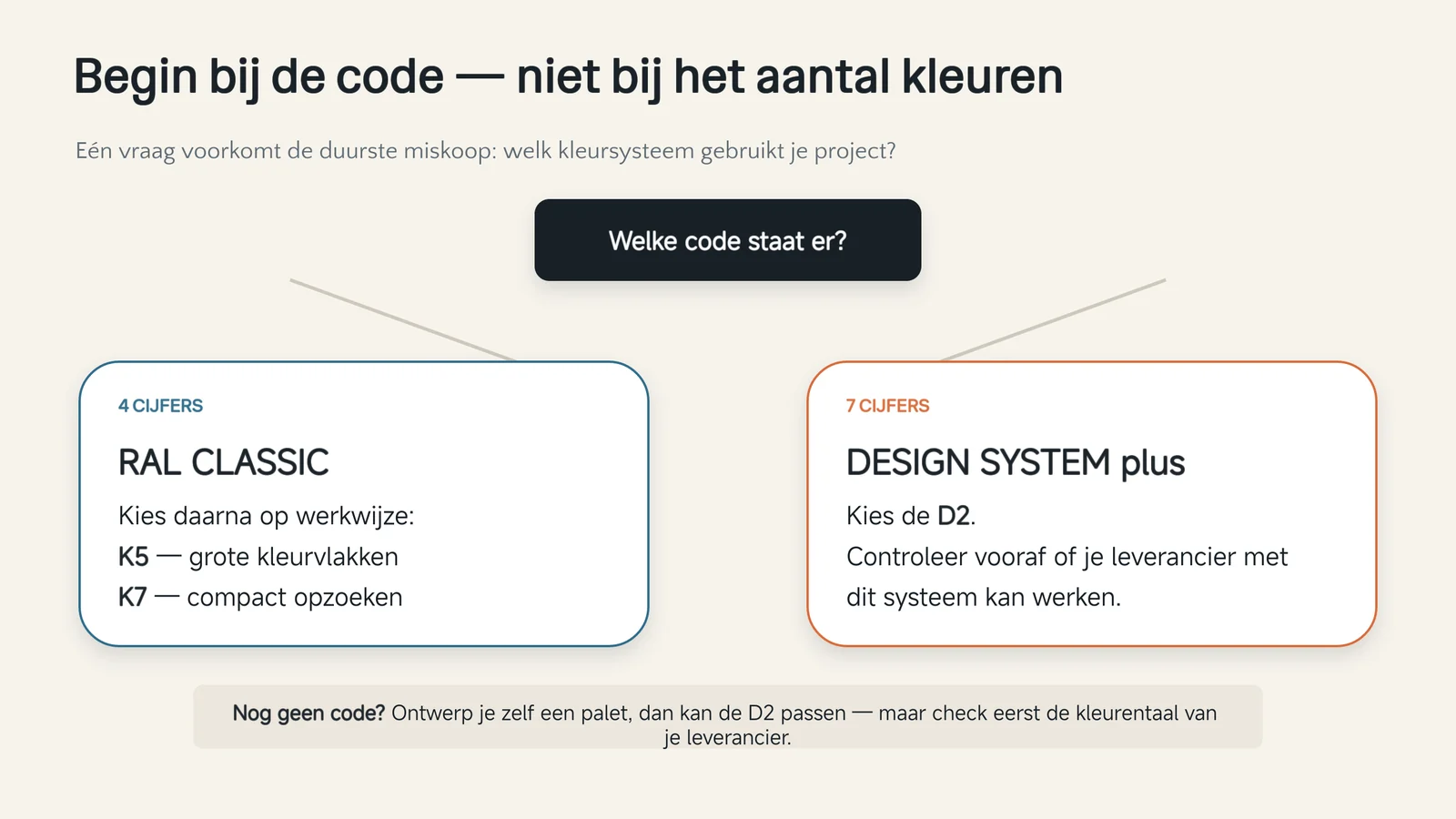 Enlarge
No code yet? If you are designing a palette yourself, the D2 can fit, provided your supplier can work with that system.
Or like this, by situation:
| Your situation | Logical choice | Why |
|---|---|---|
| You are looking up a four-digit RAL code | K7 | Compact RAL CLASSIC fan |
| You are comparing CLASSIC colours extensively with a customer | K5 | Large colour areas |
| You are looking for a semi-matt CLASSIC reference | K5 semi-matt | Large semi-matt areas |
| You are assessing a gloss reference or LRV values | K5 gloss | Gloss areas and LRV information |
| You are developing a palette in RAL DESIGN SYSTEM plus | D2 | 1,825 colours with seven-digit codes |
| You are choosing from a few colours for one small project | Colour card from your supplier or K7 | A professional fan is often not necessary |
Only then does it come down to format, colour areas and gloss.
The three fans side by side
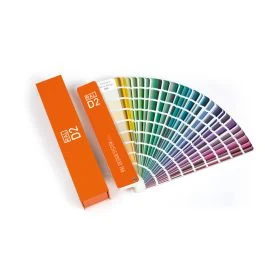
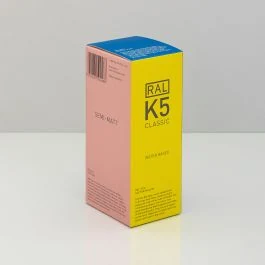
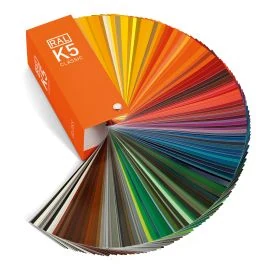
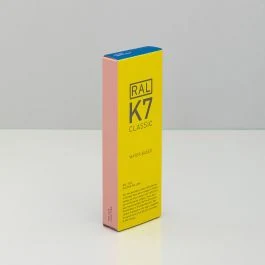
Product photos: RAL.
| Model | Colour system | Colours | Presentation | Gloss | Best for |
|---|---|---|---|---|---|
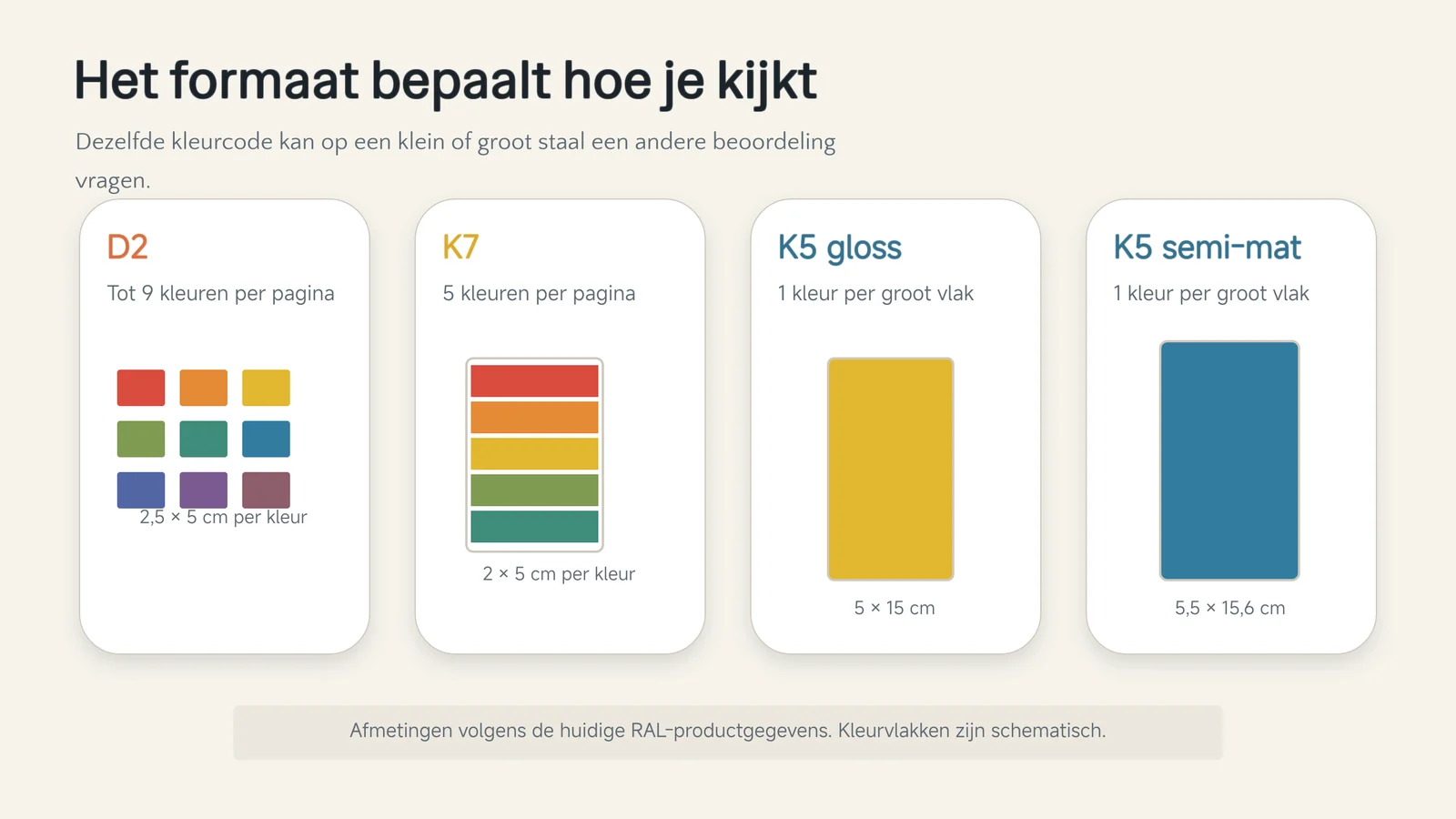
| RAL D2 | DESIGN SYSTEM plus | 1,825 | Up to nine colours per page, 2.5 × 5 cm per colour | Semi-matt | Finding and developing colour palettes |
| RAL K5 semi-matt | CLASSIC | 216 | One colour per page, 5.5 × 15.6 cm | Semi-matt | Comparing CLASSIC colours thoroughly |
| RAL K5 gloss | CLASSIC | 216 | One colour per page, 5 × 15 cm | Gloss | Gloss reference and LRV values |
| RAL K7 | CLASSIC | 216 | Five colours per page, 2 × 5 cm per colour | Gloss | Looking up CLASSIC colours compactly |
In short: the D2 is not a “bigger K5”. The K5 and K7 differ mainly in the size of the colour areas; the D2 differs mainly in colour system.
 Enlarge
What's in it, how big is it and what does it cost new?
According to RAL's product pages (checked on 26 November 2026):
| Model | Closed | Weight | Packaging | Colour names | New from RAL, excl. VAT |
|---|---|---|---|---|---|
| RAL D2 | 28.8 × 5 × 5 cm, 225 colour pages | 1.02 kg | Protective box | English on the front; German, Chinese and Russian on the back | € 165,00 |
| RAL K5 semi-matt | 15.6 × 5.5 × 7.5 cm | 0.55 kg | U-shaped protective sleeve | Code and name in eight languages on the back | € 49,00 |
| RAL K5 gloss | 15.6 × 5.6 × 5.9 cm | 0.54 kg | U-shaped protective sleeve | Code, name in eight languages and LRV value on the back | € 49,00 |
| RAL K7 | 15 × 5 × 2 cm | 0.13 kg | Protective packaging | English for every colour; German, Spanish, French and Chinese on extra pages | € 17,50 |
Prices from the RAL web shop, excluding VAT and shipping. Prices can change; what a copy costs from us is shown live under “In our shop”.
At 130 grams, the K7 is the lightest: RAL itself calls it handy to take with you. It contains 193 solid colours, 15 pearl colours, 6 fluorescent colours, one iron mica colour and one metallic colour. The K5 contains the same CLASSIC collection, including the safety, signal and metallic colours.
Editions
According to RAL, the current K5 semi-matt and K7 are a limited anniversary edition marking 100 years of RAL, with a design by the Dutch studio Raw Color. A second-hand copy may be an older edition with different packaging. The K5 and K7 are made with water-based paint; according to RAL, it is more resistant to UV light than nitrocellulose lacquer and therefore yellows less quickly.
RAL gives no fixed replacement interval. So keep your fan in its sleeve or box, out of the sun, and if in doubt compare a heavily used page with one that has barely been opened.
The RAL D2: for when the colour still has to take shape
The D2 is at its strongest when you are still searching. You don't need an existing code, but build a palette or compare many subtle variations.
The 1,825 colours are arranged according to RAL DESIGN SYSTEM plus. That system uses seven-digit codes and, according to RAL, is built around hue, lightness and saturation. For design work, that structure helps you place colours side by side systematically.
Example: an interior has to become one whole
An interior designer doesn't want walls, fitted cupboards and textiles in exactly the same colour. Everything has to hang together, but with enough difference in depth.
With the D2, they compare several variations within one colour family. That is more useful than putting a few familiar CLASSIC colours side by side, provided that the next batches in the project understand and can work with the same DESIGN SYSTEM plus codes.
That is why the D2 always comes with a second question: can my paint supplier or manufacturer work with this code? Check that before you settle on a palette.
When the D2 is the wrong choice
If your plan or quote says RAL 7016, you are looking for a RAL CLASSIC reference. A D2 won't solve that job. A colour that looks close is not the same as an identical CLASSIC colour. So for anyone mainly looking up existing CLASSIC codes, the D2 is not an upgrade but a different tool.
RAL D2 is not in stock right now. Let me know when it comes in →
The RAL K5: no extra colours, but more colour to look at
The K5 contains the same 216 RAL CLASSIC colours as the K7. The difference is in the presentation: each colour gets a large area that fills almost the whole page.
That is useful when colours sit close together. A small sample shows you the code, but can sometimes make subtle differences harder to see. A larger area lets you look more calmly at how a colour comes across next to another shade or next to a material sample.
Example: three dark shades look alike
A furniture maker shows a customer three dark RAL CLASSIC shades. On small samples the conversation is difficult: under the showroom lighting the shades look closer together than expected.
With the K5, they place the three colours side by side and next to the chosen wood. The larger areas make the comparison easier for the customer. The K5 doesn't fully predict the end result: lacquer, gloss level, substrate and lighting all play a part.
The RAL K7: the same CLASSIC colours, more compact
The K7 also contains all 216 RAL CLASSIC colours, but shows five per page. That makes it a good deal more compact than the K5.
That makes it practical when your main aim is to look up or confirm a code. For extensive colour presentations the small swatches are less strong, but that is not what the K7 is made for.
Example: the painter checks a code on site
A painter is at a customer's home; the customer wants the same shade of grey as an existing building. An old quote lists a four-digit RAL code. With the K7 the painter looks up the colour and confirms with the customer that the code is right. A large colour swatch is not needed for that.
In plain terms: choose the K7 to look up a RAL CLASSIC colour in a compact format. Choose the K5 when the size of the colour swatch matters for your comparison or presentation.
RAL K7 is not in stock right now. Let me know when it comes in →
K5 semi-matt or K5 gloss?
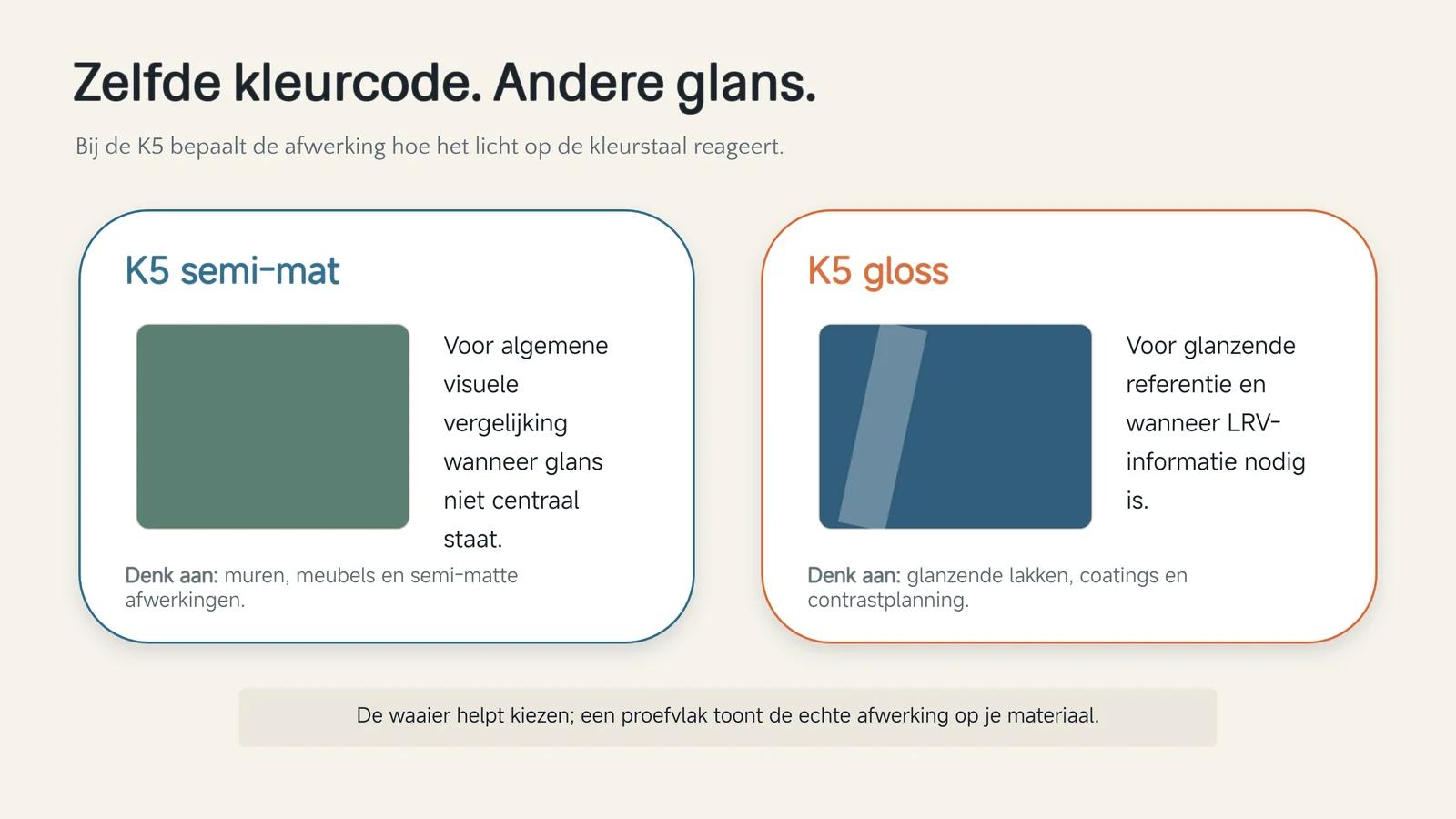
With the K5 you also choose the finish of the colour swatches. That matters, because gloss helps determine how you perceive a colour.
 Enlarge
Choose K5 semi-matt when
- you are looking for a semi-matt reference;
- you are comparing colours for general design or interior applications;
- gloss is not an important part of your assessment.
Choose K5 gloss when
- you are looking for a gloss reference;
- you work with gloss paint, lacquer or powder coating;
- you need the LRV value (light reflectance value) alongside the colour.
The K5 gloss states the LRV value on the back. That helps when light-dark contrasts count in your design or specification.
Example: the coating has to be glossy
A metalworker has a steel frame powder-coated in a glossy RAL CLASSIC colour. The customer will also assess the gloss. The K5 gloss is then a better match than the semi-matt K5. Even so, the fan is not a sample of the coating: the coater confirms which degree of gloss their powder can deliver, and for a critical application a test panel is sensible.
In stock RAL K5 semi-matt · Very good · €39.99 →
RAL K5 gloss is not in stock right now. Let me know when it comes in →
What to look for in a second-hand RAL fan?
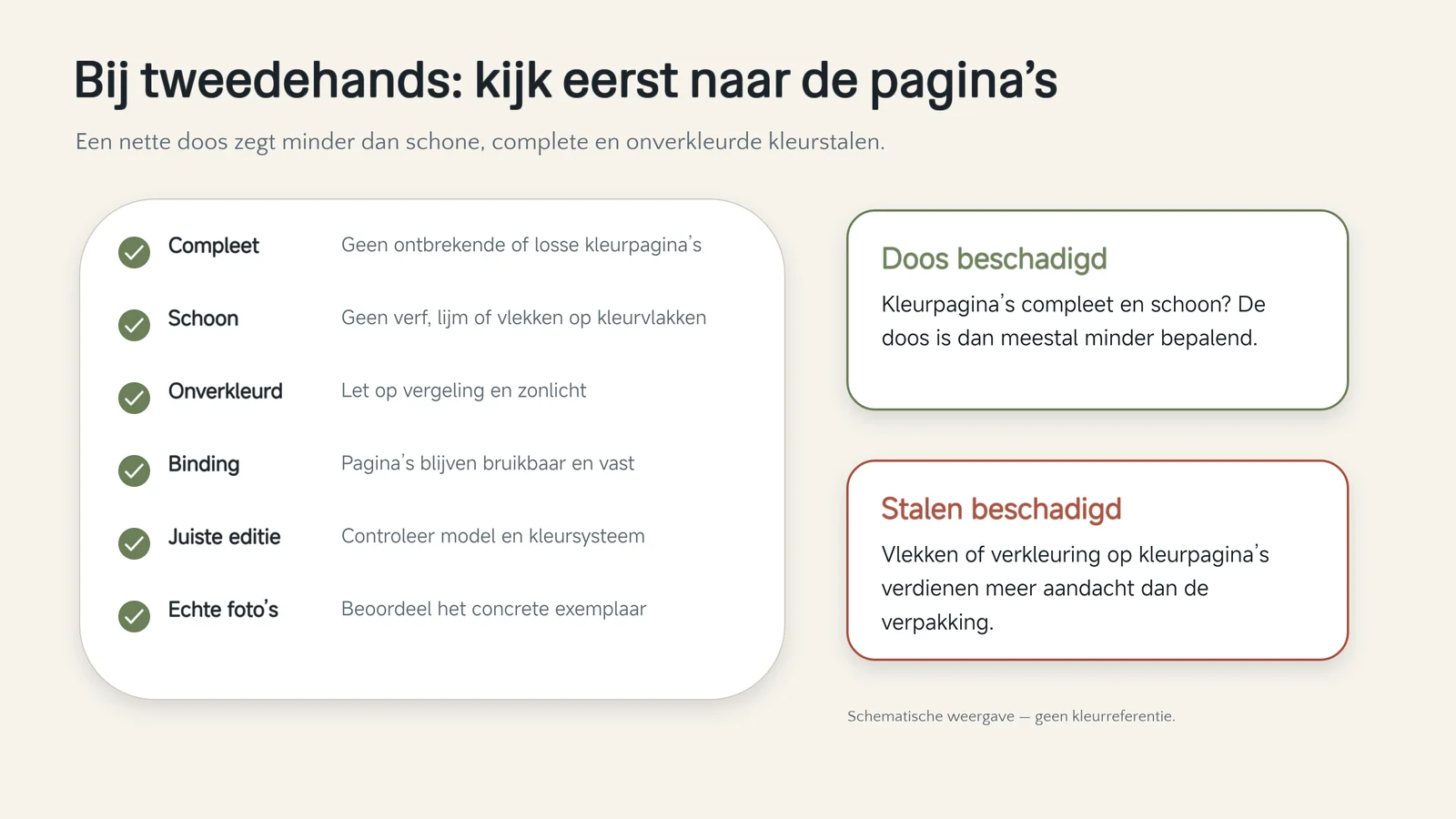
With a second-hand fan, the value is not in the outside. The colour pages determine how usable the copy still is.
 Enlarge
- Is it complete? A missing colour page matters more than damaged packaging. The D2 has 225 colour pages; with a K5 or K7 too, all the samples must be present and firmly attached.
- Are the colour swatches clean? Paint splashes, glue, greasy marks and deep scratches get in the way of seeing the colour. Marks on the protective sleeve matter less.
- Do you see discolouration or yellowing? A fan that has sat in the sun for a long time can discolour. Compare pages that were often left open with better-protected pages.
- Which edition are you buying? A second-hand fan may be older than the current anniversary edition. The colour collection remains RAL CLASSIC or DESIGN SYSTEM plus, but packaging and details can differ. Features of the new model do not automatically apply to an older copy.
- Is it the right system? A D2 contains no CLASSIC colours, and a K5 or K7 no DESIGN SYSTEM plus colours.
- Do you see real photos? Photos of opened pages, the binding and any stains tell you more than a catalogue image.
Example: tidy box or tidy colour pages?
A second-hand K5 has a dented box, but the colour pages are complete, clean and not discoloured. Another K5 comes in an almost pristine box, but has paint splashes on several pages and is somewhat yellowed. Despite the tidier box, the second is the poorer choice.
At Secondbay, what we saw on each copy is set out in the condition report on the product page, with real photos of that copy.
Before you choose: three steps
- First choose the colour system: RAL CLASSIC or RAL DESIGN SYSTEM plus.
- Then choose the size of the colour patches: large on the K5, compact on the K7, several colours per page on the D2.
- Only then choose the finish: semi-matt or gloss.
A fan deck helps you choose a colour, discuss it and record it with a code. It is not what you use to approve a production batch: for that you use agreed tolerances, current reference samples and, where necessary, a spectrophotometer.
Two colours can look alike under one light source and clearly differ under another. This is called metamerism. So do not make a final choice under mixed light, look at the sample in the place where the colour will go and hold it next to the material you will actually be painting or coating. On important projects, have a test patch made.
A fan deck prevents a lot of misunderstanding. It does not make colour checking unnecessary.
In stock now


Frequently asked questions
Is the RAL D2 better than the RAL K5?
Not automatically. The D2 contains more colours, but uses RAL DESIGN SYSTEM plus. The K5 uses RAL CLASSIC and shows each colour on a large surface. The best choice depends on the colour system your project requires.
Do the RAL K5 and K7 contain the same colours?
Yes. According to RAL, both contain the 216 colours of RAL CLASSIC. The K5 shows them larger; the K7 shows five colours per page and is more compact.
What does a new RAL K5 or K7 cost?
In the RAL web shop, a K5 (semi-matt or gloss) costs € 49,00 and a K7 € 17,50, excluding VAT and shipping (checked on 26 November 2026). The D2 costs € 165,00. Prices may change.
Can I convert a RAL DESIGN colour to RAL CLASSIC?
Not always exactly. A colour that looks similar in another system is not necessarily the same colour. When ordering, use the system specified by the customer, architect or manufacturer.
Can a RAL fan deck predict the final paint result?
Not entirely. The substrate, paint system, gloss level and lighting all affect the result. Use the fan deck to choose and agree on a colour, and have a sample made for important projects.
Is a second-hand RAL fan deck still usable?
A complete fan deck with clean, undamaged and non-discoloured colour pages is still usable for choosing colours visually. Look especially at the colour swatches, the binding and the edition, not just the box.
How this guide was written
This guide combines RAL's official product data with what we see in returned product fans that come in to us. We compared the fans on colour system, number of colours, colour areas, gloss and use.
The examples are recognisable work situations, not customer testimonials or measurements. We do not check colour accuracy in a lab. The grey areas in the diagrams are not a colour reference.
Written on 26 November 2026 · Checked on 26 November 2026
Sources
More guides
 Buying returned · ToysReturned LEGO: how to assess a box with a dentReturned LEGO is a new set in a box that has been through something: a dent, a knock in transit or a return. So don't look at the cardboard, look at the bags. If the numbered bags are still sealed, the set is complete and unplayed. A pristine box doesn't make the set better, only neater.
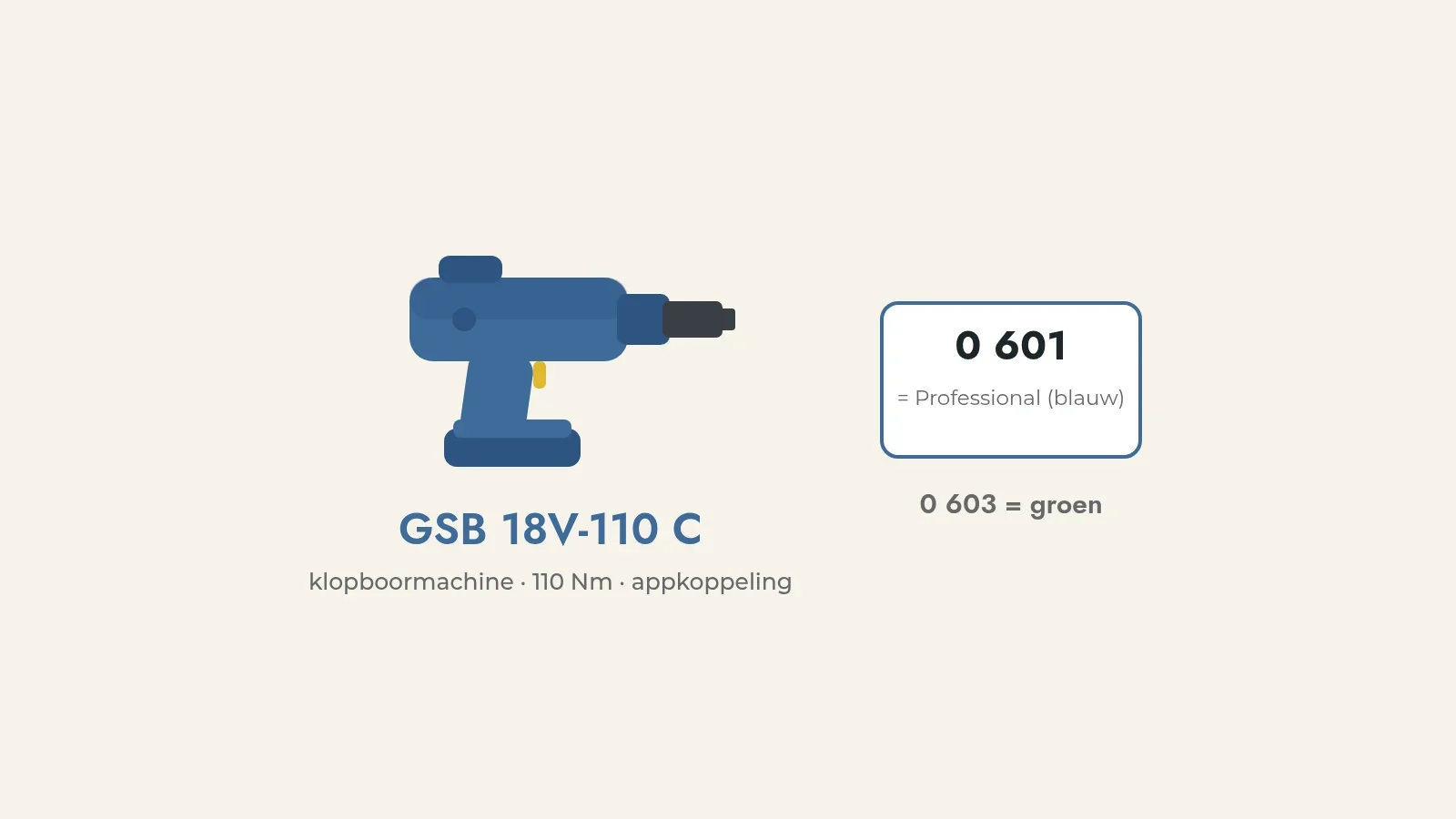 Buying returned · ToolsReading Bosch model numbers: what GSR, GSB and GBH tell youA Bosch Professional name such as GSB 18V-110 C breaks down into four parts: the letters say what kind of machine it is (GSB is a combi drill), 18V the battery platform, the number an indicator of power and the letters at the end the extras (EC is a brushless motor). Only compare the number between machines with the same letters.
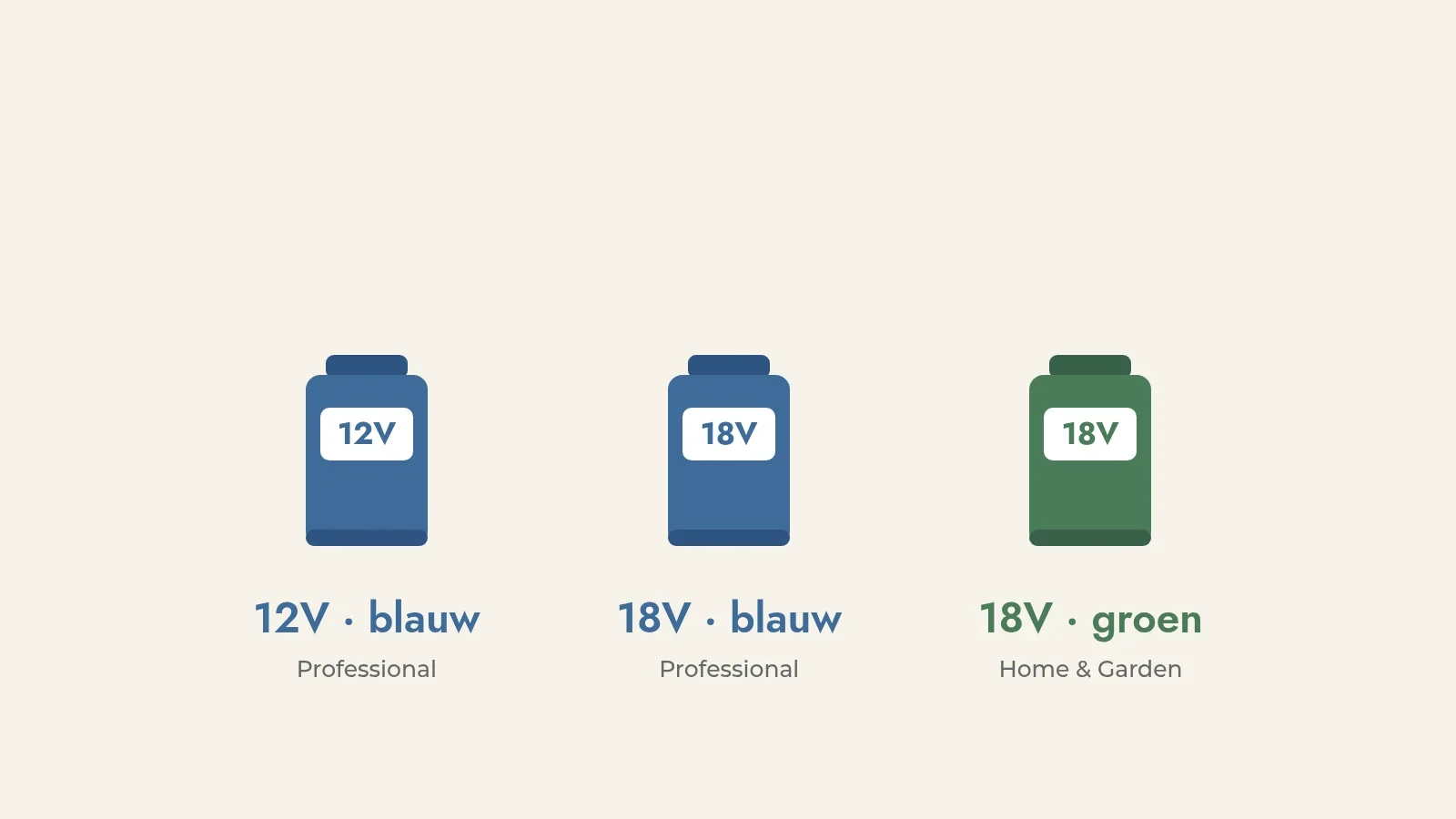 Choose · ToolsWhich Bosch battery fits where? Blue, green, 12V and 18VStart with the colour. Blue Bosch Professional batteries only fit blue tools, green Power for All batteries only fit green ones, even though both say 18V. Within the blue range, all 18V batteries have been compatible with each other since 2008, and 10.8V is the same platform as 12V.Bosch Professional 12V starter set · Bosch Professional 18V starter set · Bosch 18V starter set (green) · Bosch GBA 36V 2,0 Ah