Tuesday, 14:17. There's a notification in my Bol.com dashboard: eight new return requests. Three in the morning, five around lunchtime. One with the reason "does not meet expectations" — a speaker that does exactly what the manufacturer promises, but apparently not what the customer had hoped for. One with "ordered too late" — a little gift that arrived after the birthday. And one — my favourite — with nothing but a question mark as an explanation.
I know that question mark by now. It means: I don't actually know why I'm sending it back, but I can, so I will.
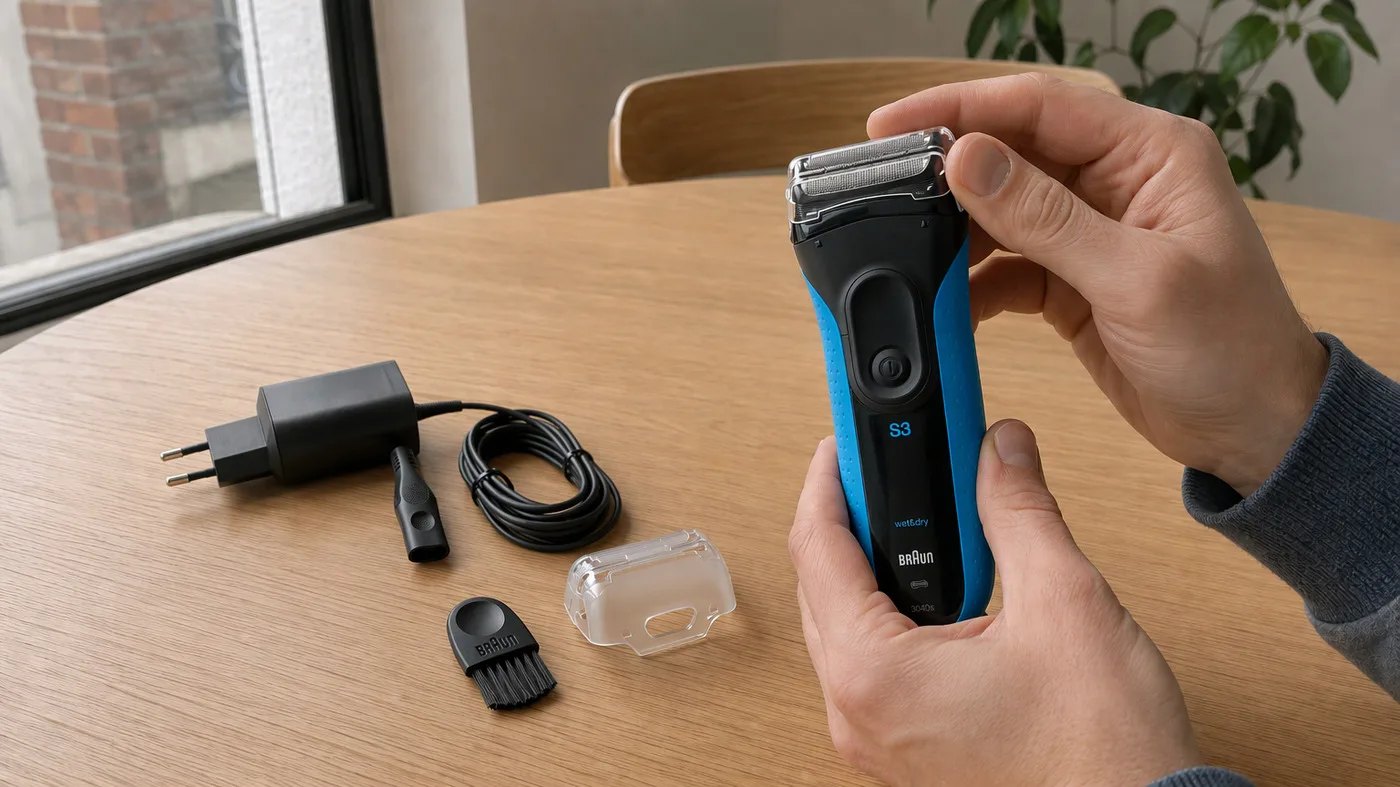
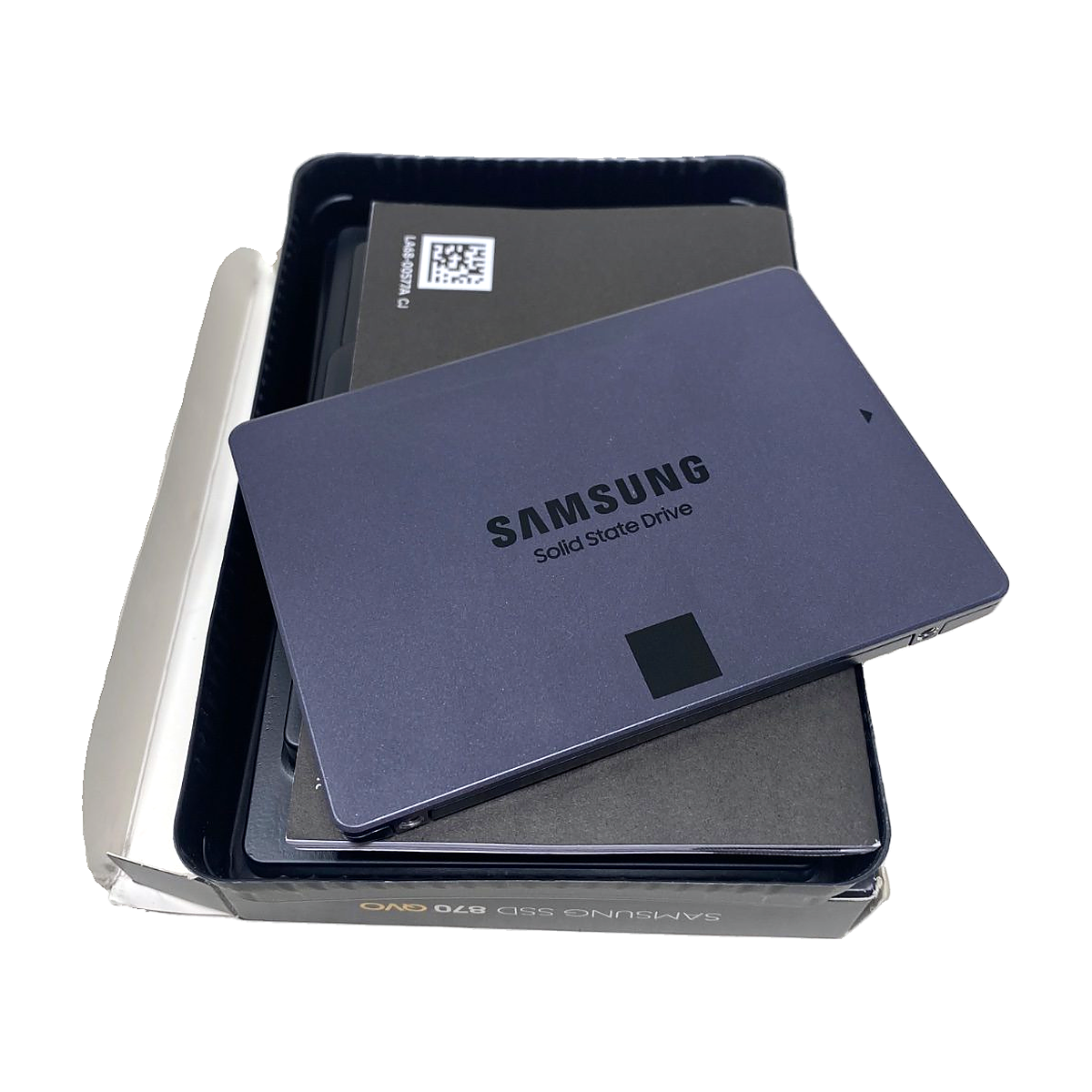
Those eight products will arrive at our warehouse in a few days. We'll open them, test them, check them. And the vast majority — somewhere between six and eight — will go back online. Not as new, but as a checked returned product with an honest description and a lower price. That's how our company works. Day in, day out. But the story I want to tell isn't about those eight products. It's about the millions.
The number: 14.4 million tonnes
In 2022 and 2023, 14.4 million tonnes of new electrical and electronic equipment was placed on the market in the European Union each year. Those were the peak years — never before had it been so high. Converted, that's 32.2 kilos per inhabitant. The Netherlands leads the way with 45.4 kilos per person, followed by Germany with 38.9 kilos. Those figures come from Eurostat, published in October 2025, and they're so large that they become abstract.
Let me make it more concrete.
32 kilos per person is — I weighed it — the weight of a small fridge. Every year, every European buys the equivalent of a fridge in new electronics. Phones, tablets, laptops, headphones, hairdryers, smartwatches, Bluetooth speakers, charging cables. It piles up in drawers, on desks, in boxes under the bed.
And when you no longer want it? That's where it gets interesting. Or rather: that's where it gets problematic.
What disappears
Every year, 14.4 million tonnes of new electronics is added. But in 2023, only 5.2 million tonnes was collected as e-waste — 11.6 kilos per inhabitant, against the 32.2 kilos being added. The difference — 20.6 kilos per person, calculated by Eurostat itself — disappears. Into drawers. Into cellars. Into the bin. Into countries where it doesn't belong.
The FutuRaM project, successor to ProSUM and one of the most detailed studies of European e-waste, calculated in 2025 that 10.7 million tonnes of e-waste is generated annually in the EU plus Iceland, Norway, Switzerland and the United Kingdom. Of that, only 54% is correctly collected and processed. The rest — almost half — is lost.
I find "lost" an odd word. As if those things had wandered off by themselves. They haven't wandered off. They're lying somewhere. In a container on its way to West Africa. In a landfill in Romania. In a drawer in your home.
What's more, those 10.7 million tonnes contain around one million tonnes of critical raw materials — copper, aluminium, neodymium, palladium. Of that million tonnes, less than half is recovered. The rest is gone. For good.
The growth nobody keeps up with
What makes the story even more complex: European e-commerce is growing faster than the recycling system can follow.
In 2024, total European e-commerce turnover reached 842 billion euros. That was reported by EuroCommerce in the summer of 2025. In Germany, the marketplace share rose from 54 to 57% of total online turnover, according to the HDE Online Monitor 2025. On Bol.com — our home platform — net turnover grew to 3.1 billion euros. That growth is good for us as sellers. But it has a flip side that we've described before: every sale creates a chance of a return.
And on Bol.com, that chance is real. Free returns are the standard there. Fourteen days to change your mind. No questions asked. That's good for the consumer — and we think so too. But it means that some of what we sell comes back. Not because it's broken. Because the customer changed their mind.
More online sales means more packaging, more transport, more returns. And more returns means more products ending up somewhere they weren't originally headed.
When Reuters wrote in 2017 about the explosive growth of eBay sellers in Europe, it was a success story. Rightly so. But the flip side of that story — the flow of returns — wasn't a topic back then. Now it is.
In Italy, the Italian news platform Sky TG24 saw the same pattern: small and medium-sized businesses that expanded their reach exponentially thanks to online marketplaces. The CIS trade centre in Campania documented how regional fashion companies began shipping their products across Europe via platforms like eBay. Even craft businesses — a shoemaker in southern Italy who learned to promote his leather goods through an eBay tips page — found their way online.
That's the opportunity economy Politico EU wrote about: marketplaces as a springboard for entrepreneurs across Europe. From Naples to Ghent. From a shoemaker to a refurbished seller.
But every leap lands somewhere. And the landing of e-commerce growth is a mountain of products that aren't used, aren't repaired, and aren't recycled.
What a single product costs the planet
We wrote earlier about the CO2 cost of new electronics: 331 kilograms per laptop, 75 to 85% of it in production. That figure from Circular Computing has stuck with me. It should stick with you too.
But I want to make a different point here. It is not only about CO2. It is about raw materials. In those 10.7 million tonnes of e-waste there is one million tonnes of materials we call "critical" — copper, aluminium, neodymium, palladium. Materials we pull out of the ground again to make new products, while the old ones sit in a drawer.
A refurbished product that we resell does not solve that. But it slows it down. Every product that gets a second owner instead of a recycling bin is a product that does not have to be produced again. That is not greenwashing. That is arithmetic.
What Europe is trying to do
The European Union sees the problem. You have to give it that.
In June 2024 the Right to Repair directive was adopted by the European Union — Parliament and Council together. The directive has been in force since July 2024. Member states have until July 2026 to transpose it into national law. The core: manufacturers are obliged to repair products, also after the warranty period, as long as the repair is technically possible and the cost is reasonable. For smartphones and tablets, the accompanying ecodesign regulation stipulates that parts must remain available for at least seven years after a product line is discontinued.
Since June 2025, smartphones and tablets sold in the EU must also carry a repairability label — a score from A to E, comparable to the energy label. How easy is the battery to replace? How long are software updates provided? How available are the parts?
That sounds good. And it is good. But — and here comes my doubt — it is also slow. For now the directive only applies to product categories for which specific ecodesign rules exist: washing machines, fridges, smartphones, tablets, electronic displays. Coffee machines? Headphones? Bluetooth speakers? Not covered. Not yet.
And there is a more fundamental problem. Right to Repair is about products that are broken. But most of the electronics we process are not broken. They have been sent back. Unused, sometimes even unopened, but with a status — "return" — that places them in a grey area. Not new enough to sell as new again. Not broken enough to repair. Not old enough to throw away.
That grey area is where we sit.
The grey area
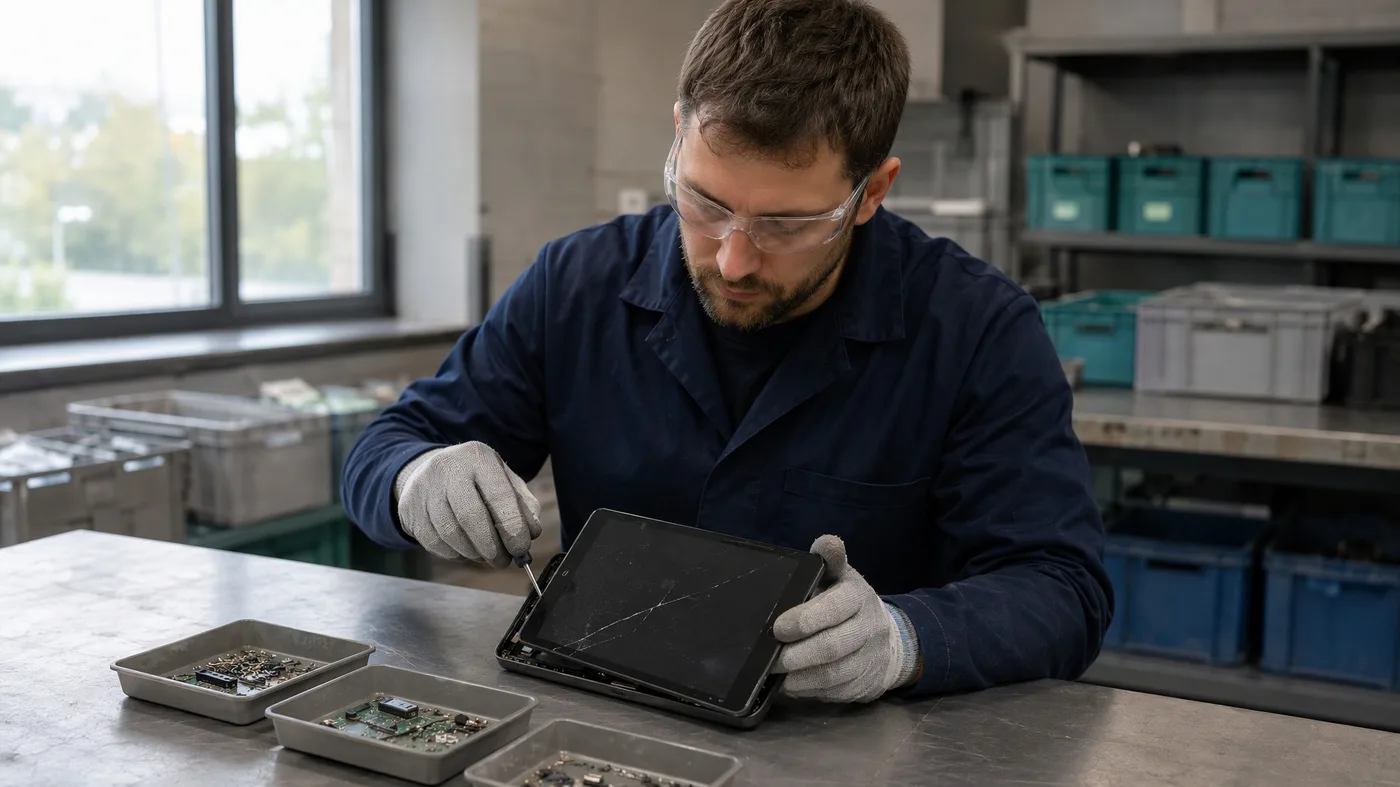
We sell refurbished and returned electronics. We have described before why we do that and what that process looks like. But the short version: every product passes through our hands. Literally. And what comes out of that process falls into three categories: like new, B-choice, or recycling bin.
Of the last batch we processed — 94 products from a German sorting centre — 81 worked perfectly. Eleven had cosmetic damage. Two had a software problem we could solve. Zero had a hardware defect that made repair impossible.
Zero. Out of 94.
But without someone to check them, to inspect them, to decide what should happen to them — there would have been 94 in the container to the recycling centre. Or worse: 94 in a drawer.
That is the work that is not in the directives. Not repairing broken things. Rescuing good things that nobody wants any more.
Why this is growing — in the south too
The European refurbished consumer electronics market was worth 7.7 billion euros in 2023, ChannelEngine reported. That share is expected to grow to 11% in 2025 — a doubling of market share in two years.
What stands out in that report: the strongest growth is in Southern Europe. Italy, Spain, Portugal. Markets where e-commerce adoption took off later than in Germany or the United Kingdom, but where the combination of price sensitivity and growing online buying behaviour creates a gap in the market for refurbished products.
That matches what we occasionally see via Vinted — we wrote about that earlier. The willingness to buy a checked second-hand product instead of new is growing. Everywhere in Europe. In the north, where it has long been common. And in the south, where it is new but quickly becoming normal.
77% of EU citizens say they would rather have a device repaired than throw it away. That emerged from a Eurobarometer survey cited by the European Commission when introducing the Right to Repair directive. Whether people actually do it is another question. But the intention is there.
What we do — and what we don't do
We don't claim to be saving the planet. Recycling is necessary. Repair is necessary. Better product design is necessary. Less consumption is — honestly — the most necessary of all, but that's not the kind of sentence you expect on a web-shop page about sustainability.
What we do is more limited and more concrete. We sit at the hinge point between "return" and "waste" and make sure that products which still work don't fall through that gap. The scale is modest — hundreds of products a month, not tens of thousands. But that hinge point exists, and someone has to stand on it.
The question mark
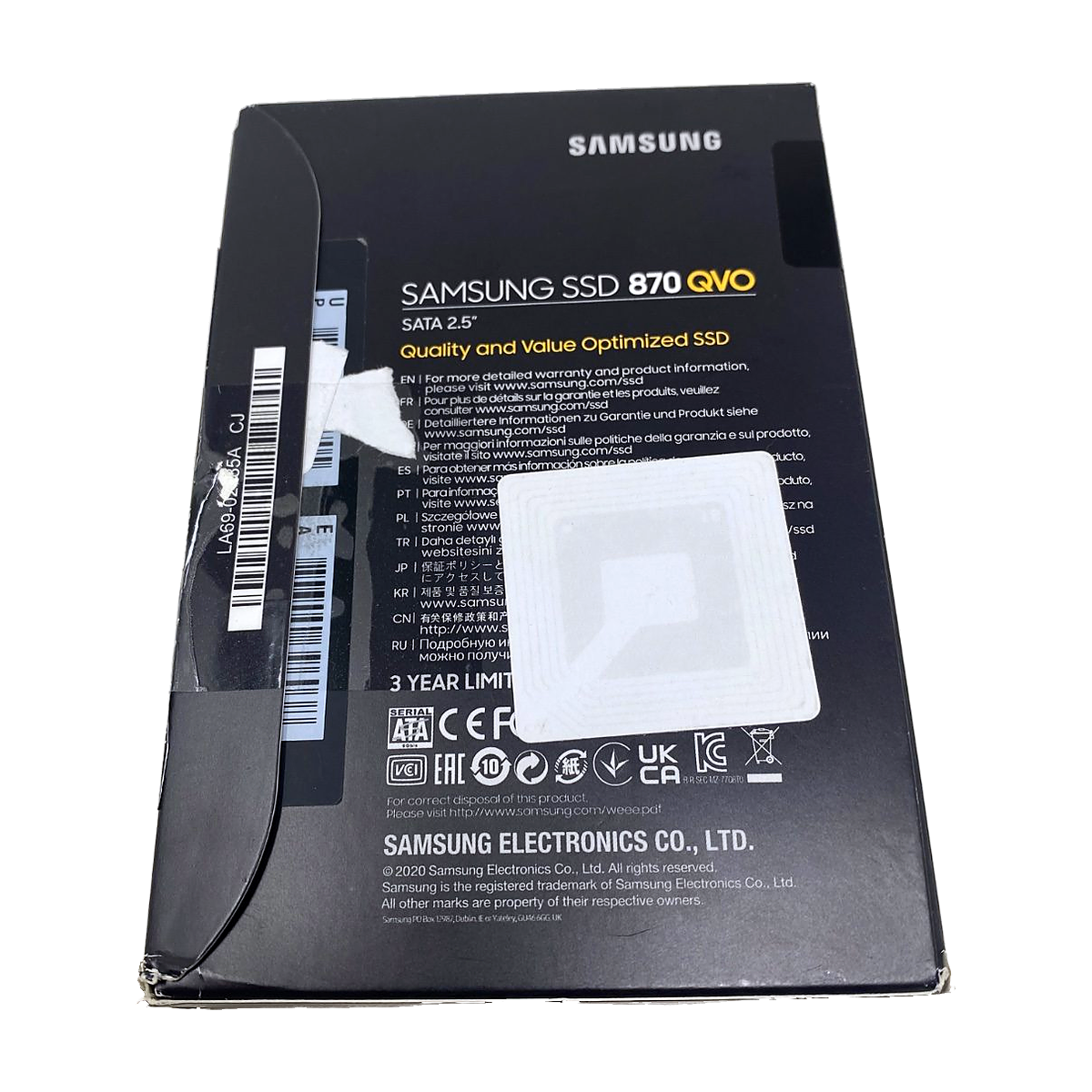
That customer with the question mark as the return reason? The product is now back with us. A Samsung Galaxy Tab, 2024 model, original packaging, protective film still on the screen. The box had a dented corner — somewhere in the returns logistics — with a sticker: "Retoure — Originalverpackung beschädigt."
We checked it. Screen: zero scratches. Battery: 100%. Software: up to date. Everything complete.
It's now online for 73 euro less than the shop price. Soon someone will buy it — someone who knows the difference between a dented box and a dented device.
And the production CO2 that a new version of this same device would cost? It won't be emitted. Not by us. Not for this product. Not today.
That's a small thing. But multiply it by hundreds of products a month, by dozens of companies like ours across Europe, and it starts to look like something. Not like a solution. Like a beginning.
Bronnen
- Eurostat. "Over 32 kg/person of new electrical & electronic gear" (2025) ec.europa.eu
- FutuRaM / UNITAR / WEEE Forum. "2050 Critical Raw Materials Outlook for Waste Electrical and Electronic Equipment" (2025) futuram.eu
- EuroCommerce / Ecommerce Europe. "European E-Commerce Report 2025" (2025) eurocommerce.eu
- HDE / Handelsverband Deutschland. "HDE Online-Monitor 2025" (2025) — betaalde publicatie; samenvatting via Ecommerce News Europe: ecommercenews.eu
- Reuters via Yahoo Finance. "eBay millionaire sellers in Germany and UK grow 50 percent in four years" (2017) finance.yahoo.com
- Sky TG24 — berichtgeving over groei Italiaanse KMO's in online handel via marktplaatsen. Geen specifieke artikel-URL beschikbaar; algemene nieuwspagina: tg24.sky.it
- CIS. "it" (Centro Ingrosso Sviluppo, Campania) — documentatie van regionale online handelsgroei in Zuid-Italië. Geen specifieke publicatie-URL gevonden; hoofdpagina: cis.it
- Circular Computing. "What Is The Carbon Footprint Of A Laptop?" (2025) circularcomputing.com
- Europees Parlement / Raad van de EU. "Richtlijn (EU) 2024/1799" — Right to Repair" (2024) eur-lex.europa.eu
- Europese Commissie. "Ecodesign Regulation for smartphones and tablets" — new EU rules apply from 20 June 2025" (2025) single-market-economy.ec.europa.eu
- Europese Commissie / Eurobarometer. "77% EU-burgers verkiest reparatie boven vervanging" (2020) — geciteerd via Europees Parlement: europarl.europa.eu
- ChannelEngine / Cross-Border Commerce Europe. "TOP 100 Consumer Electronics Retail Europe 2024" (2024) cbcommerce.eu